things-to-do
The National Museum of Fine Arts in Manila
The National Museum of Fine Arts occupies the neoclassical Old Legislative Building in Ermita and displays Philippine painting and sculpture, with free admission.
Listen in English · 4 min
How we reported this
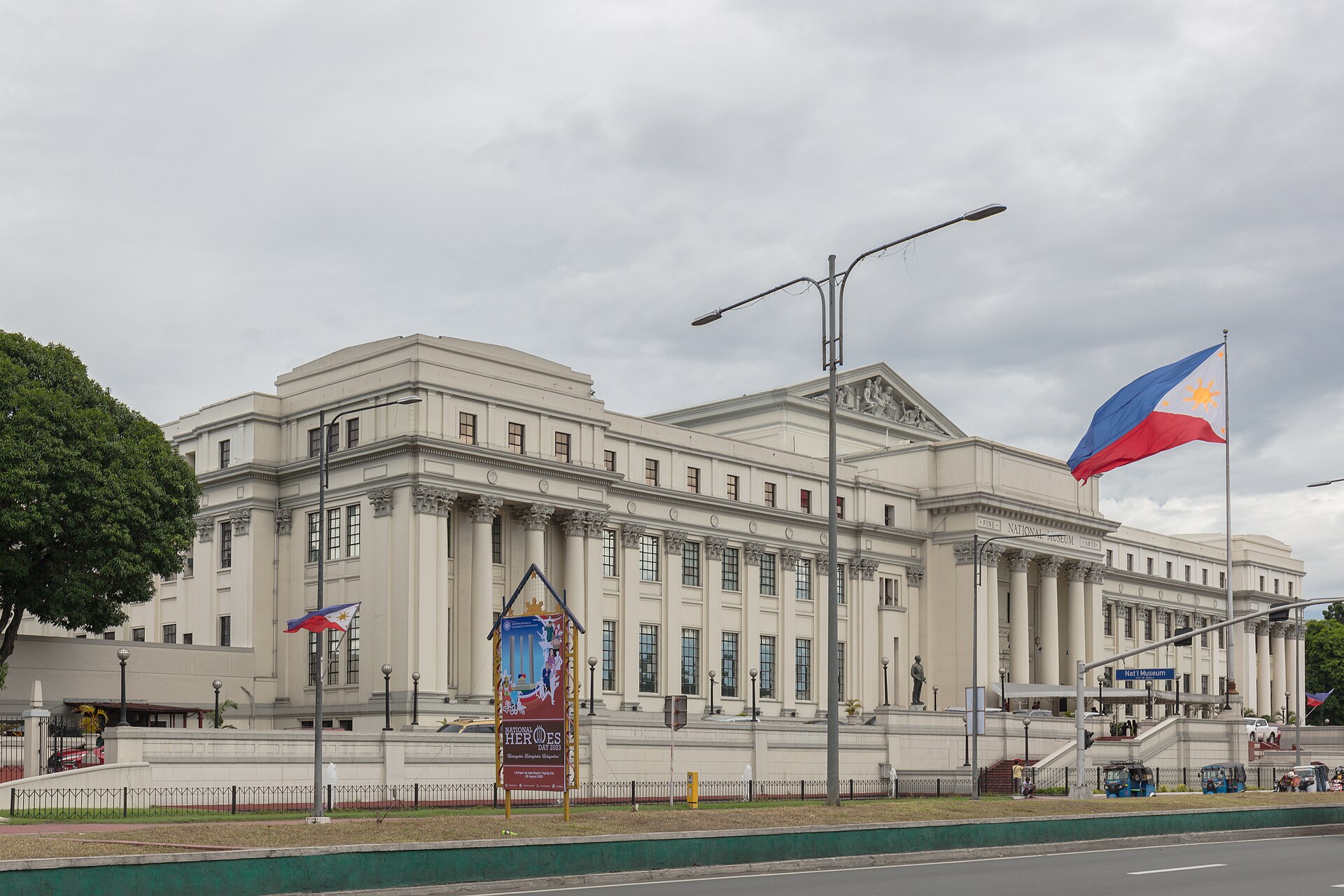
The National Museum of Fine Arts is one of the cornerstone cultural institutions of Manila. Housed in the grand neoclassical building that once served as the Old Legislative Building in the Ermita district, it forms part of the wider National Museum complex near Rizal Park and is dedicated to Philippine painting and sculpture.
The building itself is a major reason to visit. Its columned facade and monumental interior halls give the collection a fitting setting, and the architecture reflects the civic ambitions of the era in which it was built. After restoration and repurposing, the structure now functions as a public gallery rather than a seat of government.
Inside, the galleries trace the development of Philippine visual art across generations. The most celebrated work on display is the large-scale historical canvas Spoliarium by Juan Luna, which occupies a hall of its own and draws many visitors specifically to see it. Around it, rooms present works by other significant Filipino artists, organized to give a sense of the country's artistic history.
The museum is part of a cluster of national institutions that also includes collections devoted to anthropology and natural history nearby. This makes it easy for visitors to plan a broader cultural day in central Manila, moving between buildings that sit within a short walk of one another and close to Rizal Park and Intramuros.
A notable practical point is that admission to the National Museum is free, part of a policy intended to make the national collections widely accessible. The galleries are indoors and air-conditioned, which makes the museum a comfortable option during the heat of the day or in the rainy season when outdoor sightseeing is less appealing.
For visitors interested in understanding the Philippines through its art, the National Museum of Fine Arts offers a clear and rewarding introduction. Its combination of a landmark building, a nationally important collection, and free entry makes it one of the most approachable cultural stops in Manila, suitable for both first-time visitors and returning residents.
Allowing time to explore at a relaxed pace is worthwhile, since the galleries reward close looking and the building itself is worth studying. Many visitors set aside part of a morning or afternoon, then continue to the neighboring national institutions or to nearby Rizal Park. In this way the museum becomes the anchor of a broader cultural day in the center of Manila rather than an isolated stop.