Wellness
Step by Step: How to Start a Walking Group in Your Neighbourhood
Neighbourhood walking groups are reshaping Manila's barangay fitness culture — and launching one costs almost nothing.
4 min read
Updated 2 h ago
Wellness
Neighbourhood walking groups are reshaping Manila's barangay fitness culture — and launching one costs almost nothing.
4 min read
Updated 2 h ago
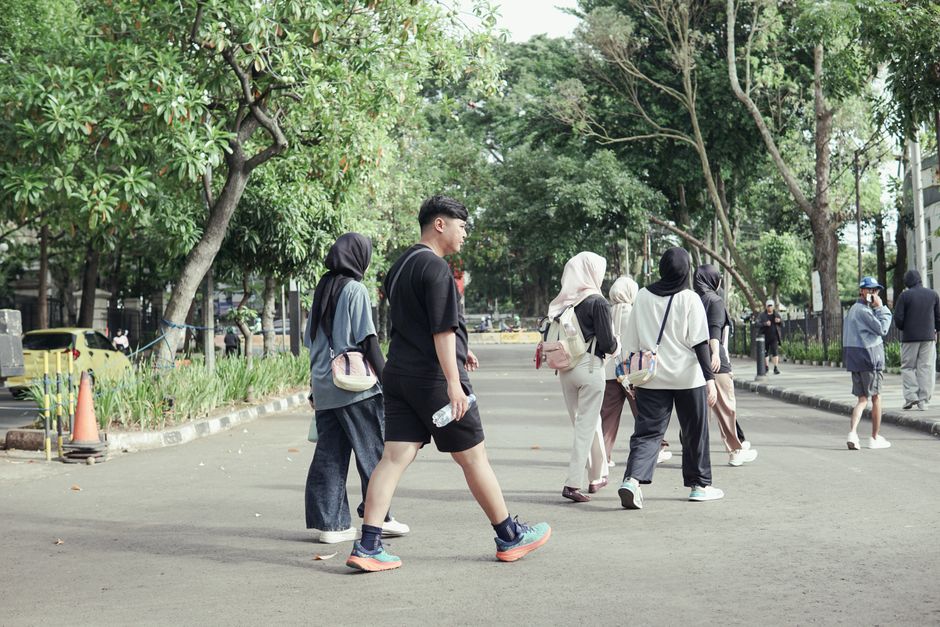
Rizal Park sees them every morning by 5:30 a.m. — clusters of residents, three to twenty strong, moving at a deliberate pace along the tree-lined paths near Kalaw Avenue. Some carry tumblers. Some wear matching shirts. All of them showed up because someone, once, sent a group chat message saying: tara, maglakad tayo. That someone started a walking group, and it changed their block.
Manila's barangay fitness scene has been building quietly for years, but momentum accelerated sharply after the Department of Health's 2025 National Physical Activity Report found that only 27 percent of adult Filipinos meet the WHO's recommended 150 minutes of moderate exercise per week. Walking — free, low-impact, sociable — is the fastest correction most health advocates recommend for urban populations with limited gym access or budget.
Solo walking is easy to skip. A group makes it harder. Exercise scientists call this social accountability, and the data behind it is stubborn: a 2023 study published in the British Journal of Sports Medicine found that people who exercised with others were 35 percent more likely to meet weekly activity targets than those who exercised alone. That gap widens for women over 40 and for people managing stress-related conditions — two demographics that dominate Manila's neighbourhood wellness conversations right now.
Hormonal health is part of the picture too. As discussion of HRT, perimenopause and testosterone management grows louder globally, local wellness communities are increasingly noting that consistent, moderate-intensity exercise — exactly what a 45-minute brisk walk delivers — supports mood regulation, sleep quality and metabolic health. Consult your physician for personal medical guidance, but the public health message from groups like the Philippine College of Lifestyle Medicine is consistent: move more, and do it with people.
The practical barrier for most Manila residents isn't motivation — it's logistics. Knowing where to start, what to do about rain, how to keep attendance up after week three. These are solvable problems.
Pick a route first, not a date. Scout it alone on a weekday at the time you intend to walk. Luneta's circumference loop is 2.8 kilometres and almost entirely flat — ideal for mixed-fitness beginners. The UP Diliman Academic Oval in Quezon City is 2.2 kilometres per loop and already hosts dozens of informal groups by 6 a.m. on weekdays. In Makati, the stretch along Ayala Triangle Gardens offers shade and a paved surface year-round. Match the route to your neighbourhood, not to aspirational distance.
Set a fixed time and day. Saturday, 6 a.m. is the single most common start slot among established Manila walking groups, according to organisers registered with Malusog Movement, a Philippine non-profit that has supported community fitness programs in more than 40 barangays since 2022. Consistency matters more than convenience — people build habits around fixed schedules.
Recruit through the most direct channels available: your barangay bulletin board, your purok's Facebook group, the chat thread of parents from your child's school. Aim for eight to twelve people for your first walk. Fewer than six and cancellations kill momentum; more than fifteen and the group fractures into conversational clusters that walk at different speeds.
Keep the rules simple. Show up on time. Walk at a pace where you can hold a conversation. No pressure to run. Rain protocol: reschedule to the next available morning, not the following week. Groups that disappear at the first typhoon signal rarely reassemble.
Gear costs almost nothing. Proper walking shoes are the single legitimate investment — expect to spend ₱1,200 to ₱2,500 for a reliable pair at SM Sports or Toby's branches across Metro Manila. Everything else — route maps, coordination, motivation — is handled by a WhatsApp thread and a consistent leader willing to show up first.
By month two, most groups develop their own rhythm: a favourite lugawan stop afterward, a shared playlist, a pace group for faster walkers. The logistics fade. The community stays. That is, in the end, what the morning walk is actually for.

Wellness

Wellness
Wellness

Wellness
About this article
Published by The Daily Manila
Spread the word
Daily brief
Free, in your inbox before 7am. Weekdays.
The Daily Network — local news across Australia