Wellness
How to Start a Walking Group in Your Neighbourhood
Manila's sidewalks are already alive with early risers — here's how to turn your morning route into a community movement.
4 min read
Updated 48 min ago
Wellness
Manila's sidewalks are already alive with early risers — here's how to turn your morning route into a community movement.
4 min read
Updated 48 min ago
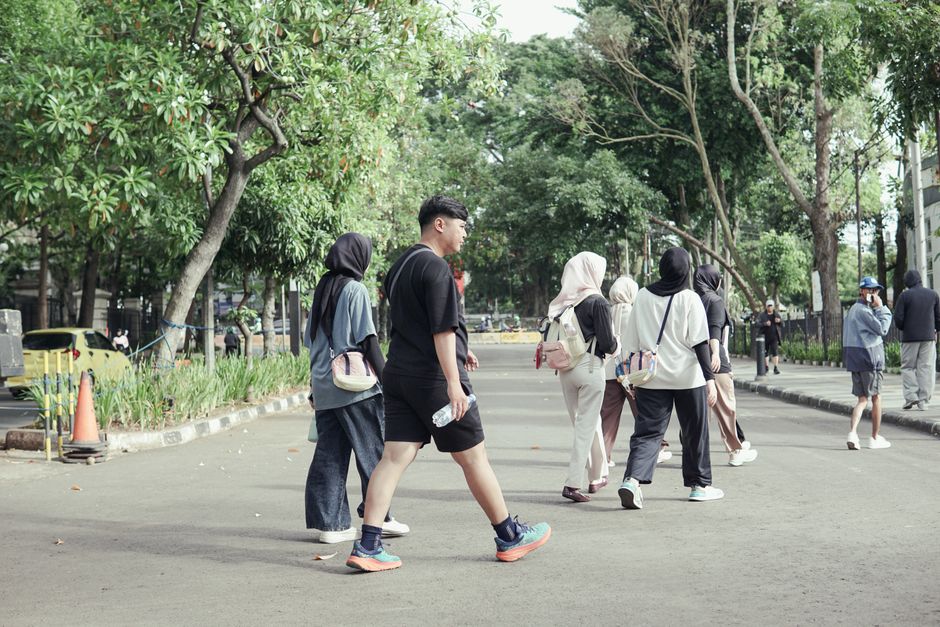
More Manileños are lacing up before sunrise. Across the city's parks and barangay roads, small clusters of walkers have been quietly multiplying since 2024, drawn by rising gym membership costs — a basic monthly pass at a mid-range fitness studio in Quezon City now runs between ₱1,500 and ₱2,800 — and a renewed appetite for low-cost, social movement. The simplest alternative costs nothing except a decent pair of shoes.
The timing matters. The World Health Organization recommends 150 minutes of moderate-intensity aerobic activity per week for adults, and brisk walking qualifies. A 2023 study published in the British Journal of Sports Medicine found that people who walk in groups are 24 percent more likely to maintain a regular exercise habit than solo walkers after six months. In a city where social bonds are currency, the group model fits Manila's character almost perfectly.
The infrastructure is already there. Rizal Park in Ermita draws several hundred walkers daily by 5:30 a.m., and the 3.5-kilometre loop around the Quezon Memorial Circle in Diliman is so well-worn that vendors have adjusted their hours to match foot traffic. Both sites are free, accessible by jeepney, and large enough to absorb newcomers without friction.
Starting a walking group does not require a permit or a budget line. The practical steps are straightforward, but skipping any one of them tends to kill momentum within three weeks. First, fix a schedule before you recruit anyone. Saturday and Sunday at 6 a.m. consistently outperform weekday slots in Manila because commute pressure vanishes. Pick one day, one time, one meeting point — the fountain at the main entrance of Quezon Memorial Circle works well because it is visible and has nearby parking — and do not move it for the first eight weeks.
Second, set a distance that feels almost too easy. Two kilometres for the first month. The goal is attendance, not performance. Groups that open with a 5K time trial lose half their members by week two. The Marikina Riverbanks area and the wide pedestrian paths along Bonifacio Global City's 5th Avenue are both good options for flatter, shadier routes that beginners can manage without dread.
Third, use the platforms your neighbours already check. A Facebook group specifically named after the barangay — Brgy. Kapitolyo Walking Club, for example — gets faster uptake than a generic fitness group. Puregold and SM community boards still work in older neighbourhoods. WhatsApp threads function well in condominium towers across Mandaluyong and Pasig, where building administrators sometimes allow wellness announcements in the residents' chat.
Retention is where most neighbourhood groups dissolve. The fix is structure without rigidity. Designate a weekly lead walker who chooses the route — rotating this role every Saturday keeps ownership distributed and stops the group from collapsing if the founder misses a Sunday. Some Manila-based groups affiliated with the Philippine Heart Association's community outreach programs have added a five-minute cool-down stretch at the end, which doubles as a social window and has measurably improved return rates in their pilot barangays in Tondo and Sampaloc.
Weather is the honest obstacle. June through September brings rain that empties even the most committed groups. The practical workaround is to identify two covered fallback routes in advance — the SM Mall of Asia's ground-floor perimeter, for instance, stretches nearly two kilometres and is open by 7 a.m. on weekends. Some groups shift to the covered walkways of Robinsons Galleria along EDSA during heavy downpours. Neither is as pleasant as open air, but both keep the habit alive.
Budget for almost nothing. A group WhatsApp thread, a shared Google Maps pin, and a consistent schedule are the only real inputs. Anyone interested in formalising their group can register as a sports organisation with their local barangay office for free, which occasionally unlocks access to covered courts and public spaces for stretching sessions. The Philippine Sports Commission also maintains a list of accredited community wellness programs that provide basic training materials at no charge. Start small, show up twice, and let the neighbourhood do the rest.
Wellness
Wellness
Wellness

Wellness
About this article
Published by The Daily Manila
Spread the word
Daily brief
Free, in your inbox before 7am. Weekdays.
The Daily Network — local news across Australia